April 26, 2010-- Today, I've reached a new status according to one of my favorite southwest archaeological guide books which reads, "
Mesa Verde and
Montezuma Castle are ruins with mass appeal. The
Dittert Site, on the other hand, is for the
confirmed archaeology buff."
My coronation as a CAB (confirmed archaeology buff) happened as a result of visiting
Dittert Site for myself. For those of you that have actually stumbled upon my blog you know I've made it a practice not to disclose locations except generally. As for
Dittert Site, the most I'll divulge is that it's more than 40 miles south of Grants, New Mexico in the El
Malpais National Conservation Area managed by the Bureau of Land Management (
BLM).
Most people who visit El
Malpais usually find themselves traversing the
Acoma-Zuni Trail,
hiking and gazing at Ventana Arch, or exploring caves deep within the lava flows but El
Malpais is also home to countless archaeological wonders seldom publicized if your willing to travel the roads less traveled.
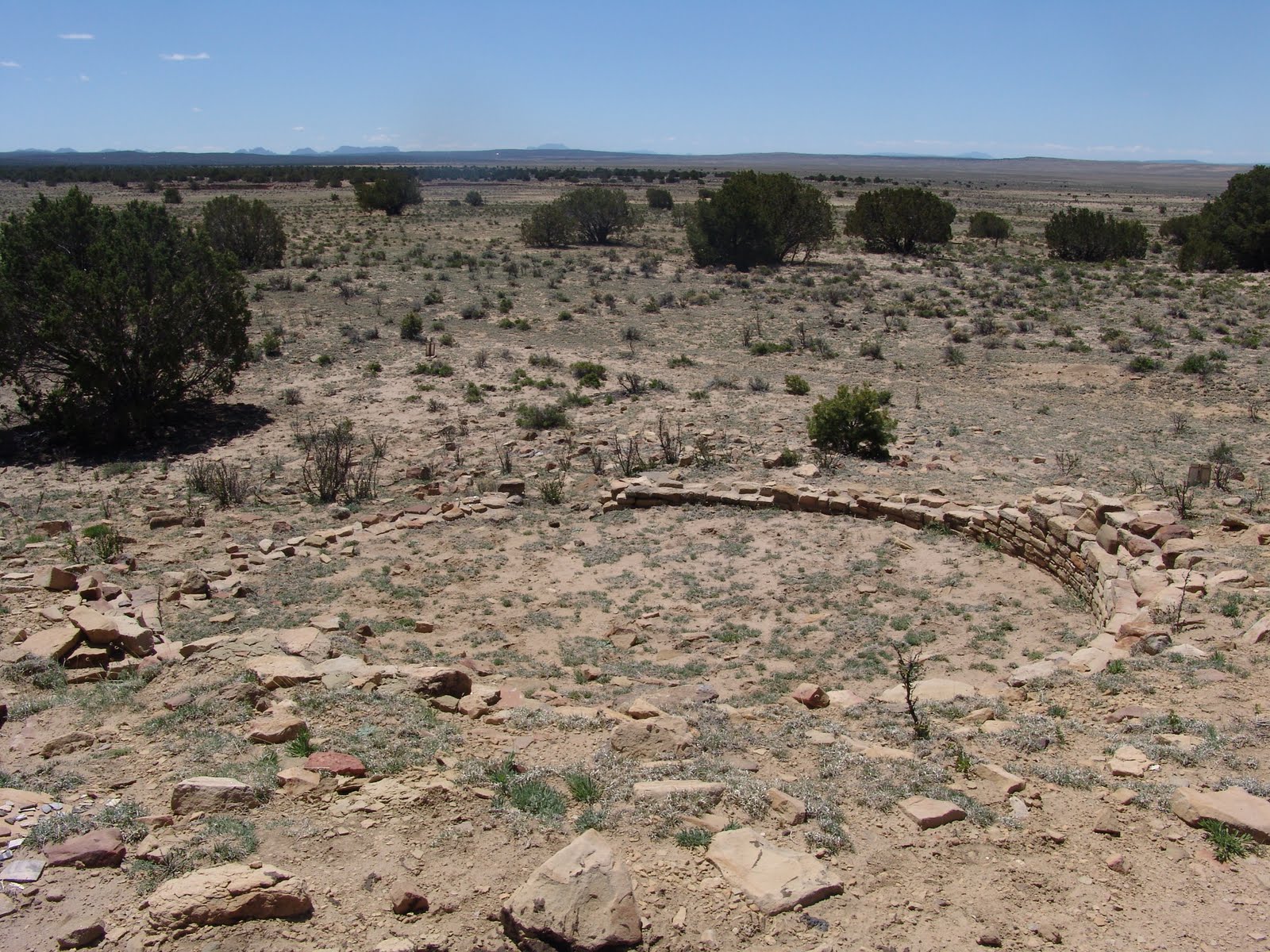
Dittert Site is home to the remains of a masonry structure of approximately 30-35 rooms and a
kiva in an "L" shape which was occupied sometime between A.D. 1000 and 1300.
From a distance the site looks simply like a mound of rock, however as one approaches the site shards become evident on the ground despite the lack of a formal trail.
Built with a
Chacoan appearance (large rooms, a blocked-in
kiva, and evidence of roads)
Dittert Site still evokes questions as to weather it is truly a
Chacoan outlier community. Certainly the evidence I saw of "pecked" sandstone fitted uniformly and the detail in the
kiva and masonry walls reminded me of
Chaco Canyon architecture.
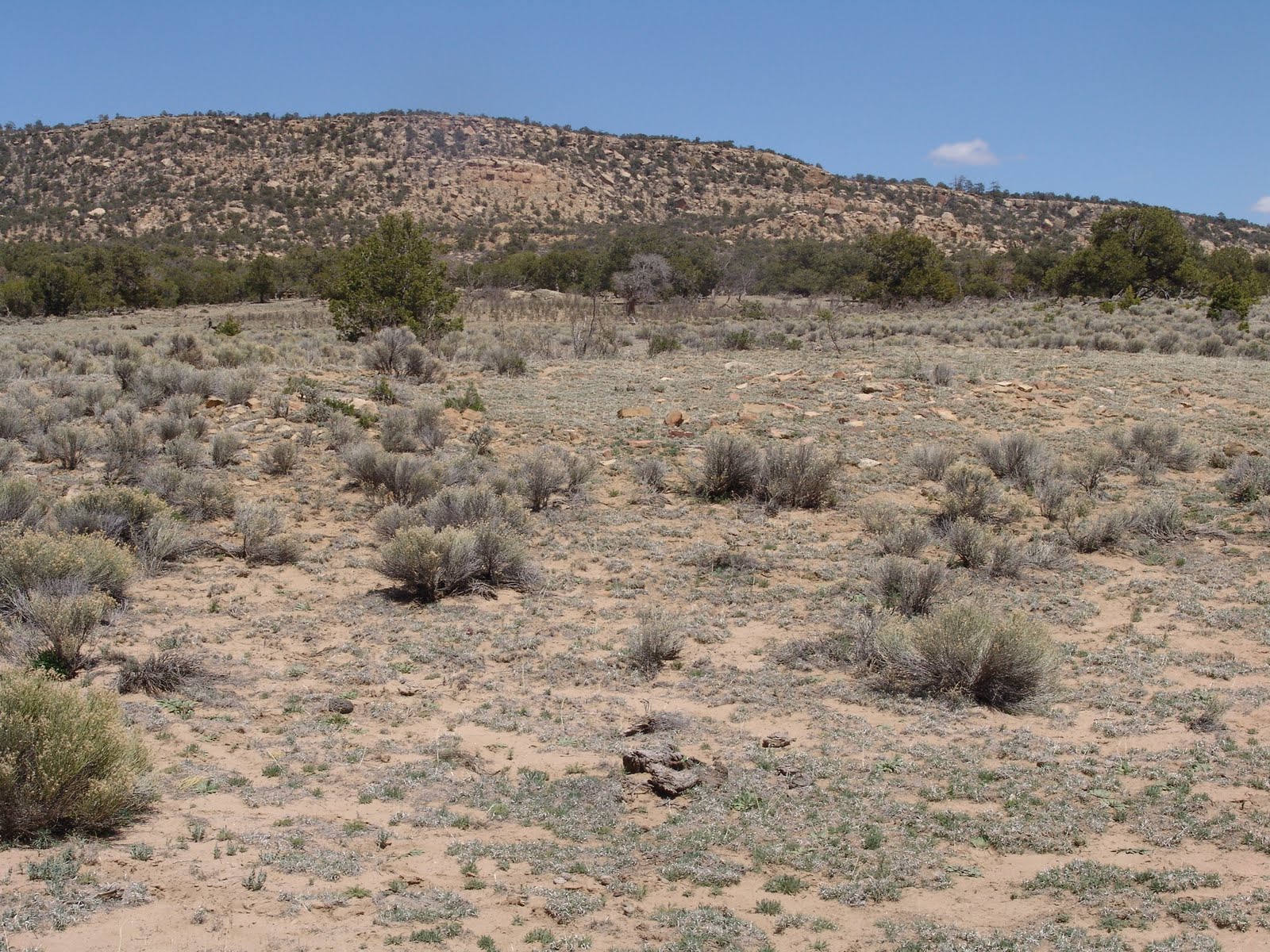
From the site view are seemingly endless as you overlook the desolate valleys which may well have been fertile grasslands in the past.
The
Dittert Site is probably central to more than 60+ sites in the canyon. Seemingly everywhere you look you can see evidence of former occupation.
Your eyes train themselves to see mounds of sandstone rubble which are evidence of collapsed walls and as you approach them you see pottery shards, obsidian and chert scattered across the ground.
From previous research I suspect that the variety of pottery must represent the semblance of a regional trade as because
Cibola white ware and White Mountain Red Wares are mixed with obsidian which was most likely brought from
north of Grants and spotted chert from the Zuni to the west.
Regardless of it's origin, the shear number of shards is dizzying and can be found widely dispersed across the landscape.
I spent hours exploring the land when I could have spent days. Certainly, given the chance I need to return to other sites in the region now that I am officially a
Certified Archaeology Buff!