June 18, 2010 -- As one of, if not the most, well preserved and remote cliff dwellings in the Southwest, visiting
Keet Seel was the culmination of many of my ambitions this past year.
The site is located 8.5 miles from the
Navajo National Monument Visitor Center and can only be accessed after obtaining a back country hiking permit and by appointment. It was awesome to complete the 17 mile hike in a day with my dad. We were the only ones on the trail that day and literally had the entire canyon to ourselves.
We arrived at National Monument at 9:00PM the night before and set camp in the great camping facilities adjacent to the visitor center.
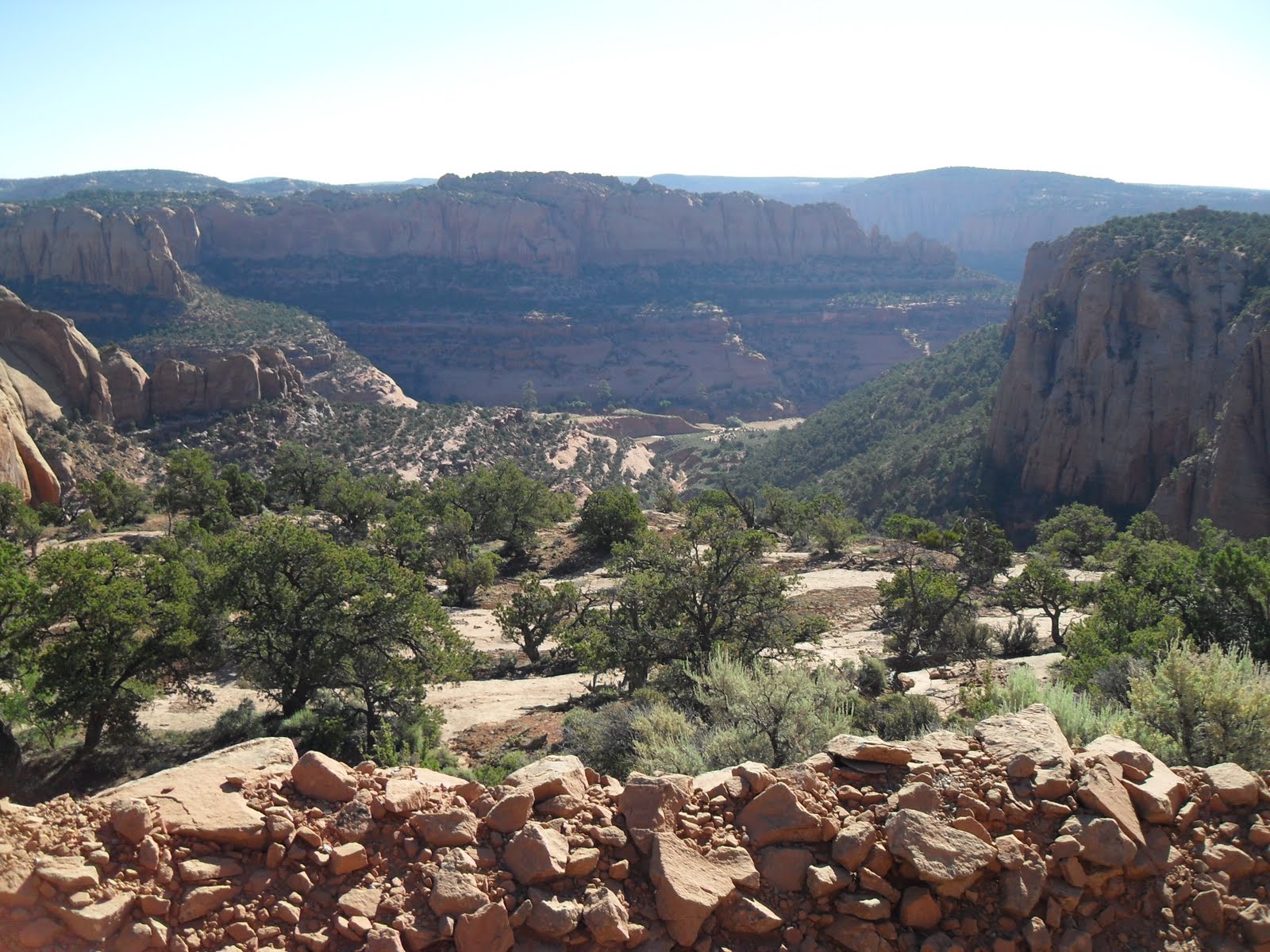
At 8:00 AM sharp we were being introduced to the terrain we would be traversing in the required orientation. The ranger gave a presentation about what we should expect to encounter, e.g. quicksand, 1000 foot vertical decent, roaming cattle, snakes, etc... We were able to hit the trail by 8:30 AM and soon found ourselves at Tsegi Canyon Overlook which gave commanding views of the entire region.
Then the trail quickly drops 1000 feet from the canyon rim to the canyon floor on rocky then sandy switchbacks which we knew we would hate to climb at the end of the day.
Once on the canyon floor the trail is marked by white posts approximately every one half to one mile along the route and although incredibly beautiful the region is indeed very remote.
We found ourselves hiking along, then across, then through the shallow stream that leads to the alcove of Keet Seel. For nearly 6+ miles we navigated the waters. At first we tried to keep our feet wet but by mile 4 we were between bare foot and soaking tennis shoes.
Upon arrival at Keet Seel we met Max our Ranger guide who lives for periods at a time in a small cabin outside the ruin. He gave us time to snarf down some trail mix and water and then led us through the incredible cliff dwelling. Since we were the only visitors for the past two days, Max was very talkative and engaging and was more than gracious in answering endless questions.
According to wikipedia, "
Kiet Siel (commonly spelled Keet Seel), stands for "broken pottery" in Navajo. The site was first occupied around AD 1250, during a time in which a large number of people were believed to be aggregating in sites such as this in this part of the American Southwest. There was a construction boom at Kiet Siel between AD 1272 and 1275, with construction then slowly tapering off and halting completely at AD 1286. Once construction halted in AD 1286, there was no evidence of structures being built until its subsequent abandonment some 20 years later. At its peak, its believed that up to 150 people inhabited this site at one time."
There are all sorts of beautiful and iconic artifacts indicative of ancestral puebloan culture at Keet Seel, such as jacal walls, symbolic petroglyphs, pottery, kivas, T-shaped doorways, etc...
We spent nearly two hours simply exploring the site and discussing theories.
Finally, having filled our minds with images view get to experience we said goodbye to our Navajo guide and began our return 8.5 mile trip. We decided to walk most of the return bare foot or in our Vibram Five Fingers only to put back on our shoes back on before the final ascent.
We reached my Montero at about 6PM and quickly made our way to Kayenta for Burger King and Gatorade. It was a long day in the hot sun but our epic hiking adventure will forever be remembered as Father and son wandered the back country in a remote corner of the Navajo Nation to see a site few have experienced. Admittedly, boy are we sore!